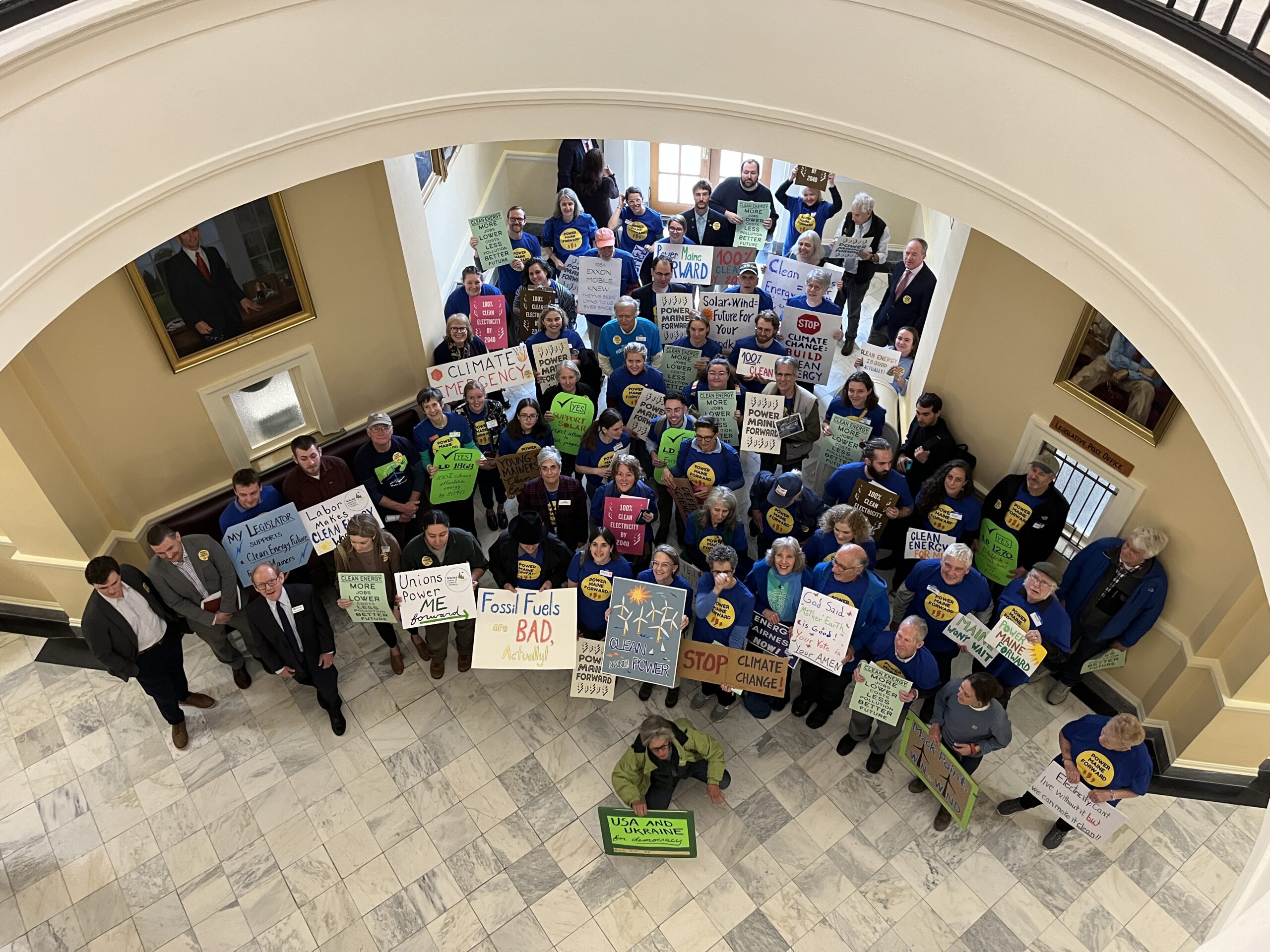
After several late nights and early mornings at the State House, we’re pleased to share an update on our key policy priorities for 2026.
In the face of the Trump administration’s intrusions on our civil rights and rollbacks to bedrock environmental laws, Maine has made real progress to improve the lives of its residents – expanding access to clean energy, funding conservation efforts, and protecting people and the environment from and toxic chemicals.
We’re deeply proud of the many legislative accomplishments we made together this year. They represent weeks and months of hard work and diligence from lawmakers, advocates, coalitions, and the activism of you – our community of friends and supporters – who care deeply about protecting the Maine we love and who power this work. We’re profoundly grateful for your support and your many contributions to this work.
Please also stay tuned for our Environmental Scorecard, which will be published in early fall. The Scorecard presents a unique opportunity to learn how your legislators voted on bills and policies that affect the environment, climate, our communities, and democracy. Holding our elected officials accountable for the votes they take each year is a cornerstone of our work here at Maine Conservation Voters.
Wins for climate, clean energy, and the environment
✅Make polluters pay for climate damages (Sponsored by Sen. Stacy Brenner, Cumberland) This bill, LD 1870, was first introduced in the legislature at the beginning of last year. In its original form, it would’ve assessed the costs and impacts of climate change to Maine and sent a bill to the world’s largest oil and gas companies in proportion to their share of emissions and climate damage to the state. This bill was amended out of committee to remove the enforcement language and focus specifically on studying and assessing the damage climate change has done to Maine. Advocates and lawmakers will use the data from this study to pass legislation that will hold the largest climate polluters financially responsible for that damage, reinvesting the compensation in Maine communities. This two-pronged approach allows Maine to begin the important process of holding climate polluters accountable while helping lawmakers negotiate a tight budget. Governor Mills signed this into law on April 16.
✅Create a fairer energy system that values people over profits (Sponsored by Sen. Anne Carney, Cumberland) Transitioning to clean energy means electrifying our energy grid, and it is paramount that this transition be equitable and puts people before the profits of utility executives. This bill, LD 1949, was also introduced last year and went through several changes. While we didn’t get everything we hoped for, this bill still lays the groundwork for a fairer, more equitable energy system, by requiring the Public Utilities Commission (PUC) to consider the affordability of electricity as a central concern in their rate-making and make publicly available important credit and collections data from CMP and Versant.
✅Expanding access to clean, affordable solar energy (Sponsored Sen. Nicole Grohoski, Hancock) Portable, plug-in solar devices have entered the market as a viable alternative to rooftop solar, expanding access to clean, reliable energy for renters, low-income households, and families whose homes aren’t suitable for rooftop. LD 1730 updates Maine’s rules to allow residents to use these devices without the burdensome interconnection requirements designed for large rooftop arrays. This reform will cut red tape to help lower electricity bills at a time of steep utility price increases, without any costs to the state or other ratepayers.
✅Prevent future spills of toxic PFAS (Sponsored by Sen. Dan Ankeles, Brunswick) Maine has taken many important steps to address PFAS contamination, but 2024’s spill of PFAS-laden firefighting foam in Brunswick was a wake-up call to the urgency of this issue. LD 222 allocates funds and resources necessary to responsibly dispose of PFAS firefighting foam stored around the state.
✅Fund the Land for Maine’s Future program LMF is Maine’s most successful and celebrated land conservation program and for good reason. Over nearly four decades, LMF has helped conserve more than 650,000 acres of working forests, farmland, and waterfront. The program is critical to protecting Maine’s natural character, historic traditions, and longstanding trades. All 16 counties have benefited. Conservation groups have been working for years to identify a continuous funding stream for LMF and, this year, for the first time in the history of the program, Governor Mills included annual funding for LMF in her supplemental budget, allocating interest from the state’s Budget Stabilization Fund (aka the “rainy day fund”) to LMF to the tune of roughly seven-million dollars a year. We’re grateful to Governor Mills and her administration for this move and excited for the conservation opportunities this presents.
✅Protect Maine Waterways by addressing stormwater pollution (Sponsored by Rep. Art Bell, Yarmouth) Extreme weather fueled by climate change has led to increased stormwater runoff throughout Maine. It carries a toxic slurry of pollution that is harmful to people and the environment. LD 646 builds on existing work from the Maine Department of Environmental Protection and establishes a Stormwater Study Commission to evaluate current laws and recommend new strategies to prevent and treat stormwater pollution.
✅Recognize the inherent and federal rights of the Wabanaki Nations (Sponsored by Sen. Rachel Talbot-Ross, Cumberland) The State of Maine has denied the Wabanaki Nations’ inherent right to self-determination, treating the Wabanaki Nations as municipalities instead of sovereign nations and denying them many rights and protections guaranteed by federal Indian law. LD 785 sought to make significant reforms to the Maine Indian Claims Settlement Implementing Act (MICSA), but Governor Mills’ preference for incremental changes made it unlikely to clear her desk. Tribal leaders and Governor Mills’ office negotiated an amendment to focus on expanding important state and sales tax for Wabanaki citizens and add a Mi’kmaq Nation Tribal Representative to the Maine Legislature, extending the option to all four Wabanaki Nations.
✅Increasing transparency for unclaimed bottle deposits (Sponsored by Sen. Stacy Brenner, Cumberland) Every year, millions of dollars in unclaimed bottle deposit funds go back to bottlers and distributors, and lax reporting requirements make it unclear how much money this is. Even if unclaimed, this money is meant to serve the public good and not line the pockets of massive corporations and bottle distributors. In its first iteration, this bill, LD 2141, would’ve re-directed some of those unclaimed funds to underfunded natural resource priorities, like lake restoration and farmland conservation. That provision was scuttled, but this bill still strengthens reporting requirements to mandate accurate data on unclaimed bottle deposit money, giving DEP the authority to pull product for any company not complying with the law – a good first step toward accountability and transparency.
Challenges & setbacks
❌Protecting Maine communities and people from large-scale data centers (Sponsored by Rep. Melanie Sachs) In a move that would’ve been a first for any state in the country, LD 307 proposed instituting a temporary, targeted pause on the construction of large-scale data center facilities, with a projected electric demand of 20-or-more megawatts. In addition to the pause, this bill would’ve established the Maine Data Center Coordination Council within the state’s Department of Energy Resources to assess the potential risks and benefits of AI data center development in Maine and identify policy tools to insulate ratepayers from rising costs, ensure grid reliability, and minimize impacts to air, water, and land. Gov. Mills signaled initial support for this bill, but ultimately vetoed to protect a data center project in Jay to proceed. The developer later pulled out, scuttling the project. Gov. Mills did establish a Data Center Council to develop a policy framework to protect communities from data centers but departed from the original bill to add two industry representatives to its makeup.